
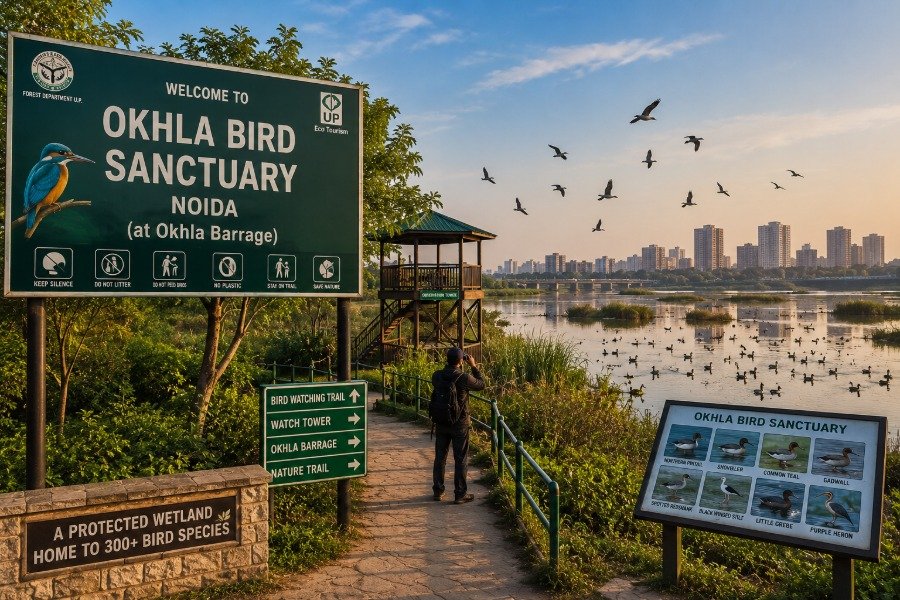
Okhla Bird Sanctuary
Okhla Bird Sanctuary Noida – Birdwatching, Metro, Attractions & Travel Guide
Okhla Bird Sanctuary is a protected wetland on the Yamuna River at the entrance to Noida, Uttar Pradesh, created around the Okhla Barrage. Established as a bird sanctuary in 1990, it is known for more than 300 recorded bird species, including numerous migratory waterbirds. It is an excellent destination for birdwatching, nature photography, quiet walks and family-friendly outdoor experiences.
What is Okhla Bird Sanctuary?
Okhla Bird Sanctuary (OBS) occupies roughly 4 square kilometres around the Okhla Barrage, where the Yamuna enters Uttar Pradesh from Delhi. The barrage created a large wetland and lake that provides habitat for waterbirds, grassland birds and other wildlife.
The sanctuary was formally established in 1990 under the Wildlife Protection Act, 1972. It has become one of Delhi-NCR’s most accessible birdwatching destinations, particularly during the winter migration season.
The official Uttar Pradesh Eco Tourism information records hundreds of bird species as well as mammals, reptiles, fish and butterflies. The sanctuary is also recognised as an Important Bird Area, making it significant beyond its recreational value.
Why Should You Visit Okhla Bird Sanctuary?
- Birdwatching: Winter brings large numbers of migratory birds to the wetland.
- Migratory species: Shoveler, Northern Pintail, Common Teal, Gadwall and Blue-winged Teal are among the species recorded during the migration season.
- Nature photography: Wetlands, birds, open water and vegetation provide varied photographic subjects.
- Family outings: A good option for families wanting an outdoor experience away from busy commercial areas.
- Solo travel: The sanctuary suits travellers looking for a slower, nature-focused morning.
- Students: Useful for observing wetland ecology and biodiversity.
- Birding enthusiasts: The sanctuary’s combination of resident and migratory species makes it particularly attractive to birders.
- Walking: A motorable section leads into the sanctuary before becoming a narrower walking trail.
- Wildlife: In addition to birds, the sanctuary records mammals, reptiles, fish and butterflies.
- Accessibility: Its location beside Noida and the Delhi Metro network makes it one of the more convenient nature destinations in the NCR.
Where is Okhla Bird Sanctuary Located?
Okhla Bird Sanctuary is located at Okhla Barrage, Sector 95, Noida, Gautam Buddh Nagar, Uttar Pradesh, on the Delhi-Uttar Pradesh border. The Yamuna forms an important part of the sanctuary’s landscape.
Quick Facts
| Travel Point | Information |
|---|---|
| Location | Okhla Barrage, Noida |
| District | Gautam Buddh Nagar |
| State | Uttar Pradesh |
| Country | India |
| Approximate area | 4 sq km |
| Established | 1990 |
| River | Yamuna |
| Nearest Metro | Okhla Bird Sanctuary Metro Station |
| Metro Line | Magenta Line |
| Nearest major airport | Indira Gandhi International Airport |
| Best birdwatching season | October–March |
| Best overall period | November–March |
The current Okhla Bird Sanctuary Metro Station on the Magenta Line provides the most direct metro access. The station is approximately 0.3 km from the sanctuary according to current metro-location information.
What are the Top Attractions in Okhla Bird Sanctuary?
1. Okhla Barrage Wetland
The barrage and its associated lake form the ecological heart of the sanctuary. The open water attracts numerous waterbirds and creates some of the area’s best birdwatching locations.
Best time: November–March
Recommended duration: 30–45 minutes
2. Migratory Bird Habitat
During winter, thousands of migratory birds arrive at wetlands across the sanctuary. Ducks and other waterbirds are among the highlights for visitors.
Best time: November–February
Recommended duration: 45–90 minutes
3. Birdwatching Trails
A road extends for a little over a kilometre before becoming a narrower walking trail. This provides opportunities to explore different habitats rather than viewing the sanctuary from a single point.
Best time: Early morning
Recommended duration: 45–60 minutes
4. Watchtowers
Strategically positioned watchtowers provide elevated views across the open fields and wetland. They can be particularly useful for observing birds without approaching too closely.
Best time: Early morning
Recommended duration: 20–30 minutes
5. Yamuna Landscape
The sanctuary’s location at the point where the Yamuna enters Uttar Pradesh gives it a distinctive riverine setting rarely found so close to the urban centres of Delhi and Noida.
Best time: Morning
Recommended duration: 20–30 minutes
6. Wildlife and Butterfly Habitat
The sanctuary’s biodiversity extends beyond birds, with official information recording mammals such as nilgai and Indian mongoose, several reptiles, fish and around 30 butterfly species.
Best time: October–March
Recommended duration: 30–45 minutes
What are the Best Things to Do?
- Arrive early for birdwatching when wildlife activity is usually more rewarding.
- Carry binoculars for viewing birds from a respectful distance.
- Photograph migratory and resident birds without disturbing them.
- Walk along designated trails and observe different wetland habitats.
- Spend time around the watchtowers for wider views.
- Learn to identify common waterbirds before your visit.
- Combine the sanctuary with nearby Noida attractions for a full-day itinerary.
- Carry a telephoto lens rather than trying to approach birds closely.
- Keep noise to a minimum, particularly around feeding and nesting areas.
When is the Best Time to Visit?
The official Uttar Pradesh Eco Tourism Board identifies November to March as the best period, while its broader information notes that migratory birds arrive from October onwards. Winter therefore offers the strongest combination of pleasant weather and bird activity.
| Season | Conditions | Recommendation |
| Summer | Hot, especially later in the day | Less comfortable for long walks |
| Monsoon | Green landscape, humid and wet | Good for nature, but weather-dependent |
| Winter | Cooler weather and migratory birds | Best overall season |
For serious birdwatchers, November to February is particularly attractive because winter migrants are present alongside resident species.
How Can You Reach Okhla Bird Sanctuary?
By Metro: The most direct option is Okhla Bird Sanctuary Metro Station on the Magenta Line. The station is very close to the sanctuary and is considerably more convenient than relying on older travel information that lists Botanical Garden as the nearest station.
By Air: Indira Gandhi International Airport (DEL) is the nearest major airport. The Uttar Pradesh Eco Tourism Board places it at approximately 23 km, while the sanctuary’s official information gives roughly 25 km by road.
By Train: Hazrat Nizamuddin Railway Station is approximately 10 km away by road, while New Delhi Railway Station is about 20 km away.
By Road: The sanctuary is well connected with Noida and Delhi through the NCR road network. Public and private transport services are available from important locations in Noida and Greater Noida.
By Taxi: A chauffeur-driven taxi is useful for visitors arriving with camera equipment, travelling with family or combining the sanctuary with several Noida attractions. India Taxi Online can be considered for airport transfers, local sightseeing, intercity travel and chauffeur-driven car rentals.
Relevant services include Delhi Taxi Service, Tempo Traveller on Rent, Force Urbania on Rent and Outstation Taxi Service.
Travel Tips
- Arrive early: Morning is generally preferable for birdwatching and comfortable walking.
- Carry binoculars: They are more useful than approaching birds for a closer view.
- Use a telephoto lens: This allows responsible wildlife photography from a distance.
- Wear comfortable footwear: Some exploration involves walking trails.
- Carry water: Especially outside the winter months.
- Dress appropriately: Light, comfortable clothing works well, while muted colours are preferable for birdwatching.
- Avoid loud noise: Sudden sounds can disturb birds and other wildlife.
- Do not feed wildlife: Feeding can alter natural behaviour and is inappropriate in a protected habitat.
- Stay on designated routes: Do not enter restricted or sensitive areas.
- Check current entry rules: Opening hours, ticket arrangements and access conditions can change, so verify them before travelling.
- Families: Children should remain with adults, particularly around water and observation areas.
- Accessibility: Confirm the current condition of walking routes and facilities if travelling with someone who has mobility requirements.
Frequently Asked Questions
What is Okhla Bird Sanctuary famous for?
Okhla Bird Sanctuary is famous for its wetland habitat and large variety of birds. More than 300 bird species have been recorded, with migratory waterbirds becoming a major attraction during winter. Its location on the Yamuna at the Delhi-Uttar Pradesh border makes it an unusual natural escape within the NCR.
Is Okhla Bird Sanctuary worth visiting?
Yes, particularly for birdwatchers, photographers, nature lovers and families. The sanctuary offers a very different experience from Noida’s shopping and entertainment districts. It is most rewarding during winter, when migratory birds join the sanctuary’s resident bird population.
Which metro station is nearest to Okhla Bird Sanctuary?
Okhla Bird Sanctuary Metro Station on the Magenta Line is the closest station. Current transport information places it approximately 0.3 km from the sanctuary. Botanical Garden is another useful interchange nearby, but it is not the closest station to the sanctuary itself.
What birds can I see at Okhla Bird Sanctuary?
Winter visitors may see species including Shoveler Duck, Northern Pintail, Common Teal, Gadwall and Blue-winged Teal. The sanctuary also supports many resident species. Bird sightings vary according to season, water conditions and the particular day of your visit.
What is the best time to visit Okhla Bird Sanctuary?
November to March is the best overall period, according to Uttar Pradesh Eco Tourism. Migratory birds begin arriving around October, while winter offers comfortable conditions for walking and birdwatching. Early mornings are generally preferable for visitors who want to spend more time observing wildlife.
How much time should I spend at Okhla Bird Sanctuary?
Allow approximately 2–3 hours for a relaxed visit. Dedicated birdwatchers may want longer because sightings depend on patience and location. A shorter visit can still be worthwhile if you concentrate on the wetland, watchtowers and accessible trails.
Is Okhla Bird Sanctuary suitable for families?
Yes. Families can enjoy birdwatching, nature observation and an outdoor walk away from Noida’s busy commercial districts. Parents should supervise children around water and ensure they remain on designated routes. Winter mornings are generally the most comfortable time for a family visit.
Can I take photographs at Okhla Bird Sanctuary?
Bird and nature photography is one of the sanctuary’s main attractions. A telephoto lens and binoculars are recommended so that visitors can observe birds without approaching them. Avoid loud noises, sudden movements and any behaviour that could disturb wildlife.
Is parking available at Okhla Bird Sanctuary?
Parking arrangements can vary, so visitors should check the current position before travelling. The nearby metro station makes public transport a practical alternative, particularly for visitors coming from Delhi or central Noida.
Can I hire a taxi to Okhla Bird Sanctuary?
Yes. A taxi can be useful from Delhi, Noida, railway stations or the airport, particularly if you are carrying photography equipment or travelling with a family. A chauffeur-driven vehicle is also practical when the sanctuary is part of a wider Noida sightseeing itinerary.
