
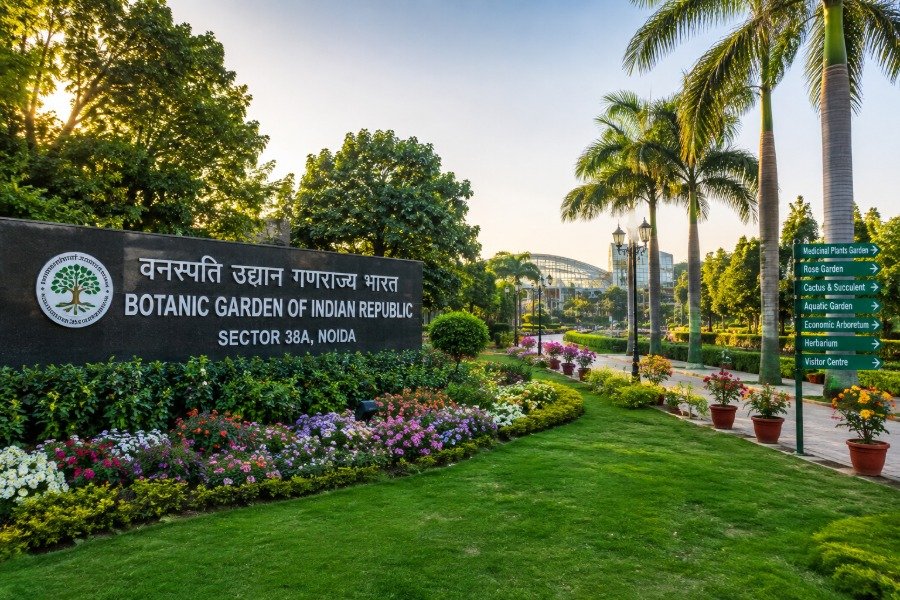
Botanical Garden
Botanical Garden Noida – Visitor Guide, Attractions & Travel Tips
Botanical Garden in Noida, Uttar Pradesh, is the Botanic Garden of Indian Republic, a large plant-conservation and environmental education site in Sector 38A. It is known for its diverse plant collections, medicinal plants, roses, cacti, aquatic gardens and research facilities. As of August 2026, visitor entry is temporarily closed because of a major redevelopment project, so travellers should check its reopening status before planning a visit.
What is Botanical Garden?
The Botanic Garden of Indian Republic (BGIR) is located in Sector 38A, Noida, Gautam Buddh Nagar, Uttar Pradesh. Established by the Ministry of Environment, Forest and Climate Change, the garden occupies about 164.85 acres and serves as a centre for plant conservation, botanical research and environmental education. It became functional in 2002.
The garden maintains a substantial collection of plants from different parts of India, together with a herbarium and seed bank. The Botanical Survey of India currently records more than 1,500 angiosperm specimens associated with the garden and around 350 introduced plant species.
For visitors, its appeal has traditionally been its combination of open green spaces, themed plant sections and an unusually peaceful setting close to one of Noida’s busiest transport hubs.
Important 2026 update: the garden is undergoing a major redevelopment and public entry has been suspended. The project is intended to introduce new themed ecological zones, improved trails and additional visitor facilities.
Why Should You Visit Botanical Garden?
Once public access resumes, Botanical Garden should appeal to:
- Nature lovers: Explore plant collections representing different ecological and economic uses.
- Families: A useful setting for children to learn about plants and biodiversity.
- Photography enthusiasts: Flowers, foliage, water features and landscaped sections provide varied subjects.
- Students: The conservation and botanical-research role gives the garden educational value.
- Couples: The green surroundings offer a quieter alternative to busy commercial attractions.
- Solo travellers: Suitable for a slow, nature-focused outing rather than a packed sightseeing schedule.
- Morning walkers: The garden has traditionally been associated with walking and outdoor recreation.
- Eco-conscious travellers: Its focus extends beyond recreation to conservation, research and environmental awareness.
For food and shopping, visitors should plan outside the garden. Noida’s Sector 18 commercial district and nearby malls offer considerably more choice than the garden itself.
Where is Botanical Garden Located?
Botanical Garden is in Sector 38A, Noida, Uttar Pradesh, India, near the Yamuna and close to the Delhi-Noida border. The official Botanical Survey of India address is Lt. Vijayant Thapar Marg, Sector 38A, Noida – 201303.
Quick Facts
| Travel point | Information |
|---|---|
| State | Uttar Pradesh |
| City | Noida |
| Sector | 38A |
| Country | India |
| Nearest Metro | Botanical Garden Metro Station |
| Metro connectivity | Blue Line and Magenta Line |
| Nearest major airport | Indira Gandhi International Airport, Delhi |
| Road access | Excellent from Delhi and Noida |
| Current visitor status | Temporarily closed for redevelopment |
The Botanical Garden Metro Station is the most convenient public-transport landmark and is directly associated with the garden area. The district administration also identifies Botanical Garden Metro Station as the nearest metro connection.
For railway travellers, Okhla Railway Station is a nearby option, while Hazrat Nizamuddin and New Delhi railway stations provide more extensive long-distance connectivity.
What are the Top Attractions in Botanical Garden?
The garden’s principal attractions are its specialist botanical sections. These are currently affected by the redevelopment closure.
1. Medicinal Plants Garden
The Ayur Vatika and Charak Udyan display medicinal plants arranged according to their traditional therapeutic uses. The Botanical Survey of India records more than 105 plants in this section.
Best time after reopening: October to March
Recommended duration: 25–35 minutes
2. Rose Garden
Located near the entrance, the Rose Garden contains numerous hybrid rose varieties arranged in landscaped beds. It is particularly attractive during the cooler flowering season.
Best time: Winter and early spring
Recommended duration: 15–20 minutes
3. Cactus and Succulent Section
A specialist area devoted to drought-adapted plants, including cacti and succulents, with a dedicated cactus house.
Best time: Throughout the cooler months
Recommended duration: 15–20 minutes
4. Aquatic Garden
The aquatic section contains water bodies designed to represent aquatic ecosystems and display regional aquatic plants.
Best time: Winter to monsoon, subject to garden conditions
Recommended duration: 15–20 minutes
5. Economic Arboretum
Trees and plants are organised according to useful products such as timber, fruit, spices, oils, gums, resins and medicines.
Best time: October to March
Recommended duration: 25 minutes
6. Fruit Plant Collection
The garden also maintains plant collections representing fruit-bearing species, adding an agricultural and educational dimension to the visit.
Best time: Winter and spring
Recommended duration: 15–20 minutes
What are the Best Things to Do?
- Walk through the specialist botanical sections after reopening.
- Photograph seasonal flowers, foliage and landscaped areas.
- Explore the medicinal plant collections and learn about traditional uses.
- Spend time observing cacti, succulents and aquatic plants.
- Combine the visit with nearby Noida attractions.
- Enjoy a slower family outing rather than rushing through the garden.
- Pair the trip with local food or shopping in Noida.
- Use the garden as part of a wider Delhi-Noida sightseeing itinerary.
When is the Best Time to Visit?
For a future visit after reopening, October to March is generally the most comfortable period for outdoor exploration. Summer afternoons can be hot, while monsoon weather can make walking trails wet.
| Season | Conditions | Recommendation |
| Summer | Hot, especially afternoons | Visit early morning if open |
| Monsoon | Green landscapes but wet conditions | Good for greenery; carry rain protection |
| Winter | Cooler and comfortable | Best overall season |
However, the more important consideration in 2026 is whether the garden has reopened, rather than the season itself.
How Can You Reach Botanical Garden?
By Air: Fly to Indira Gandhi International Airport (DEL) in Delhi and continue by road or metro. The Gautam Buddh Nagar district administration lists New Delhi as the nearest airport for the attraction.
By Train: Travellers can use New Delhi, Hazrat Nizamuddin or other Delhi railway stations and continue towards Noida by metro or taxi. Okhla Railway Station is another nearby rail option.
By Metro: Botanical Garden Metro Station is the easiest public-transport connection. The station is served by the Delhi Metro network, making the area accessible from both Delhi and Noida.
By Road: The garden is conveniently reached from Delhi, Noida, Ghaziabad and Greater Noida through the NCR road network.
For airport transfers, family sightseeing, intercity journeys or chauffeur-driven travel, travellers can consider India Taxi Online, which provides car rental and taxi services across Delhi-NCR. India Taxi Online
Relevant services include Delhi Taxi Service, Tempo Traveller on Rent, Force Urbania on Rent and Delhi Sightseeing Tour.
Travel Tips
- Check reopening status first: Public entry is currently suspended during redevelopment.
- Plan for mornings: Cooler hours are preferable for walking when the garden reopens.
- Wear comfortable footwear: The attraction is designed to be explored on foot.
- Carry water: Particularly important outside the winter season.
- Photography: Use natural light for flowers and foliage and avoid damaging plants for photographs.
- Families: Keep children on designated paths and discourage touching or picking plants.
- Accessibility: Confirm current accessible routes and visitor facilities directly with the garden before travelling.
- Parking: Confirm parking arrangements before arrival, as facilities may change during redevelopment.
- Local etiquette: Keep the gardens clean and respect conservation areas, plant labels and restricted sections.
Frequently Asked Questions
What is Botanical Garden Noida famous for?
Botanical Garden Noida is famous for its diverse plant collections and conservation work. Its specialist areas include medicinal plants, roses, cacti and succulents, aquatic plants and economically useful trees. It also functions as a centre for botanical research and environmental education rather than being simply a recreational park.
Is Botanical Garden Noida worth visiting?
It is potentially worthwhile for travellers interested in plants, photography, conservation and quiet outdoor spaces. However, the garden is temporarily closed to visitors during its redevelopment in 2026. Check the current reopening status before travelling rather than arriving expecting normal public access.
How much time should I spend at Botanical Garden?
After reopening, allow around 1.5 to 2.5 hours for a relaxed visit. Plant enthusiasts may want longer because the garden covers a substantial area and contains several specialist sections. A short visit can focus on the rose, medicinal, cactus and aquatic areas.
Which is the nearest metro station to Botanical Garden?
Botanical Garden Metro Station is the nearest and most convenient metro connection. It is an important interchange within the Delhi Metro network and provides convenient access from Delhi and different parts of Noida.
Which railway station is nearest to Botanical Garden?
Okhla Railway Station is among the closest railway options, while Hazrat Nizamuddin and New Delhi are more useful for many long-distance travellers because they offer substantially broader rail connectivity. From these stations, visitors can continue by metro or taxi.
Which airport is closest to Botanical Garden?
Indira Gandhi International Airport (DEL), Delhi is the practical major airport for visitors travelling to Botanical Garden from outside the NCR. The Gautam Buddh Nagar district administration identifies New Delhi as the nearest airport.
Is Botanical Garden suitable for families?
Yes, once it reopens. Its green spaces and plant collections make it particularly useful for families wanting an educational outdoor outing. Children can learn about medicinal plants, flowers, trees and ecological diversity while exploring the garden at a relaxed pace.
Can I hire a taxi to Botanical Garden?
Yes. Taxi travel is convenient from Delhi, Noida, Greater Noida and the airport. A chauffeur-driven car can also be useful if Botanical Garden is combined with several NCR attractions, particularly for families or groups carrying luggage.
Is parking available at Botanical Garden?
Parking arrangements can change during the redevelopment project, so visitors should verify the current position before travelling. It is better not to rely on older travel websites for parking information while construction work continues.
What is the best season to visit Botanical Garden?
For outdoor exploration after reopening, October to March is the most comfortable period. Winter offers pleasant conditions for walking and photography, while spring can be rewarding for flowers. Summer afternoons are considerably less comfortable, and monsoon visits depend on rainfall and ground conditions.
